

Pub-Sub vs Message Queue vs Message Broker
What’s the difference?

When you’re working on a distributed system and need components to communicate asynchronously, you’ll hear terms like: “pub-sub”, “message queue”, and “message broker”.
Although they are used interchangeably sometimes, they’re not the same thing.
Simply put:
A message broker is the infrastructure. Message queues and pub-sub are messaging patterns that brokers implement.
In this article, we’ll explore:
What each term means
How they differ architecturally
When to use each pattern
Real-world examples and use cases
How modern systems like Kafka, RabbitMQ, and Redis fit in
1. The Core Concepts
Before diving into comparisons, let’s define each term clearly.
1.1 Message Broker
A message broker is the middleware infrastructure that receives, stores, and routes messages between producers and consumers. It’s the “thing” that sits in the middle.
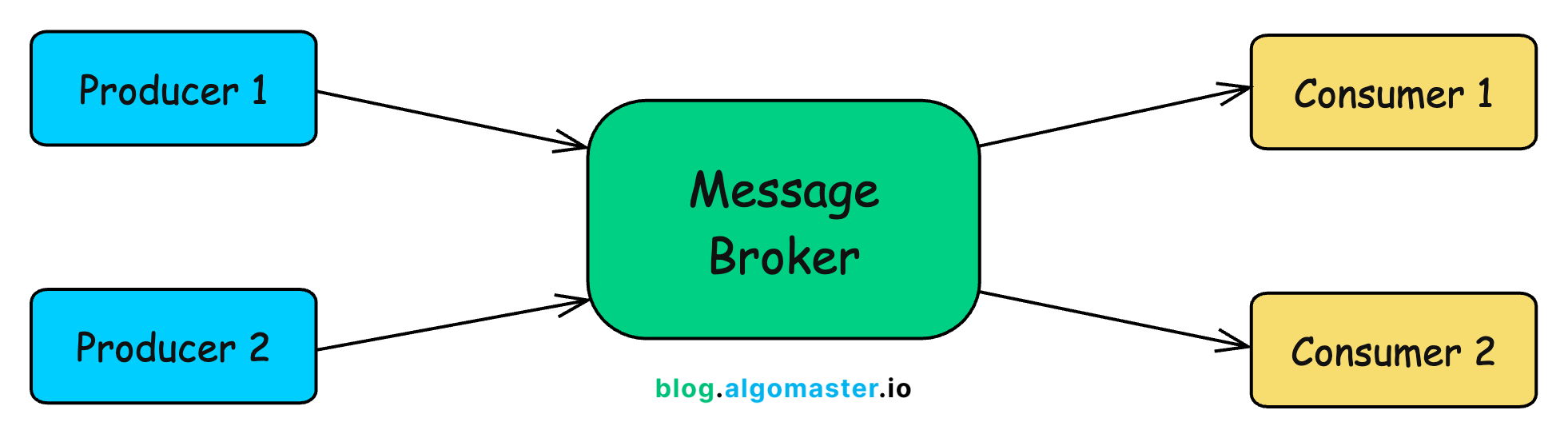
Think of a message broker like a post office. It receives mail (messages), stores it temporarily, and delivers it to the right recipients based on addresses (routing rules).
Examples: RabbitMQ, Apache Kafka, ActiveMQ
Key responsibilities:
Accept messages from producers
Store messages durably or transiently
Route messages to appropriate consumers
Handle delivery guarantees (at-least-once, exactly-once)
Manage consumer acknowledgments
1.2 Message Queue
A message queue is a messaging pattern where messages are sent to a queue and consumed by exactly one consumer. Messages are typically processed in order and removed from the queue after consumption.
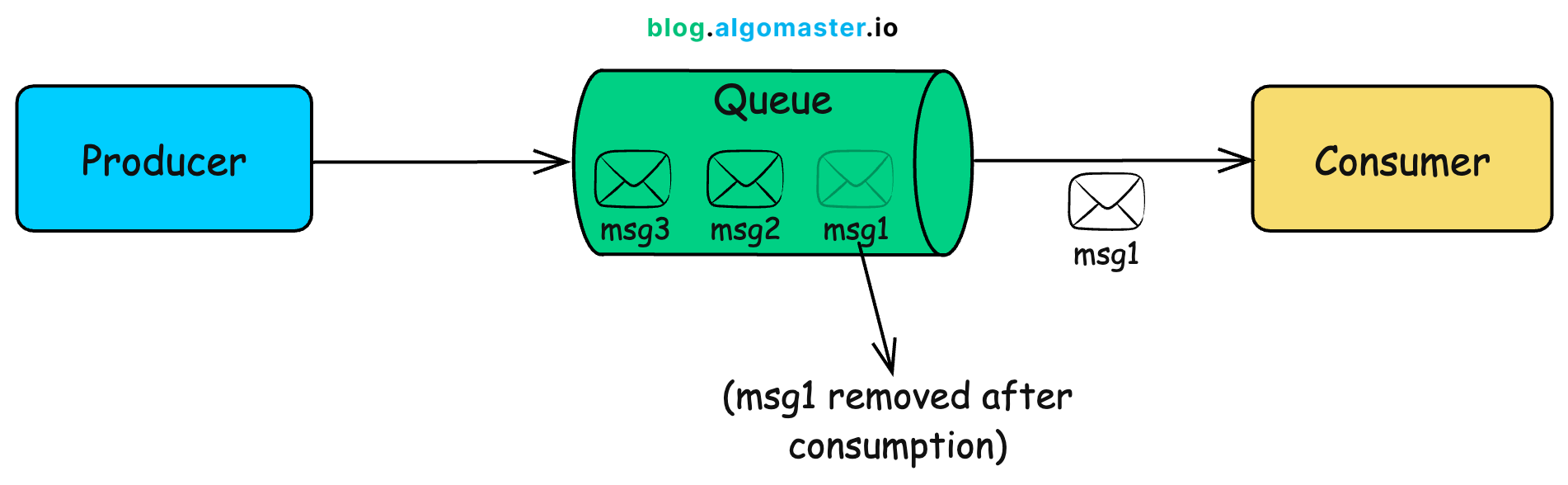
Message queues enable asynchronous service-to-service communication, especially in serverless and microservices architectures. They allow you to build reliable background processing, work distribution, and decoupled systems.
Examples: SQS queues, RabbitMQ queues
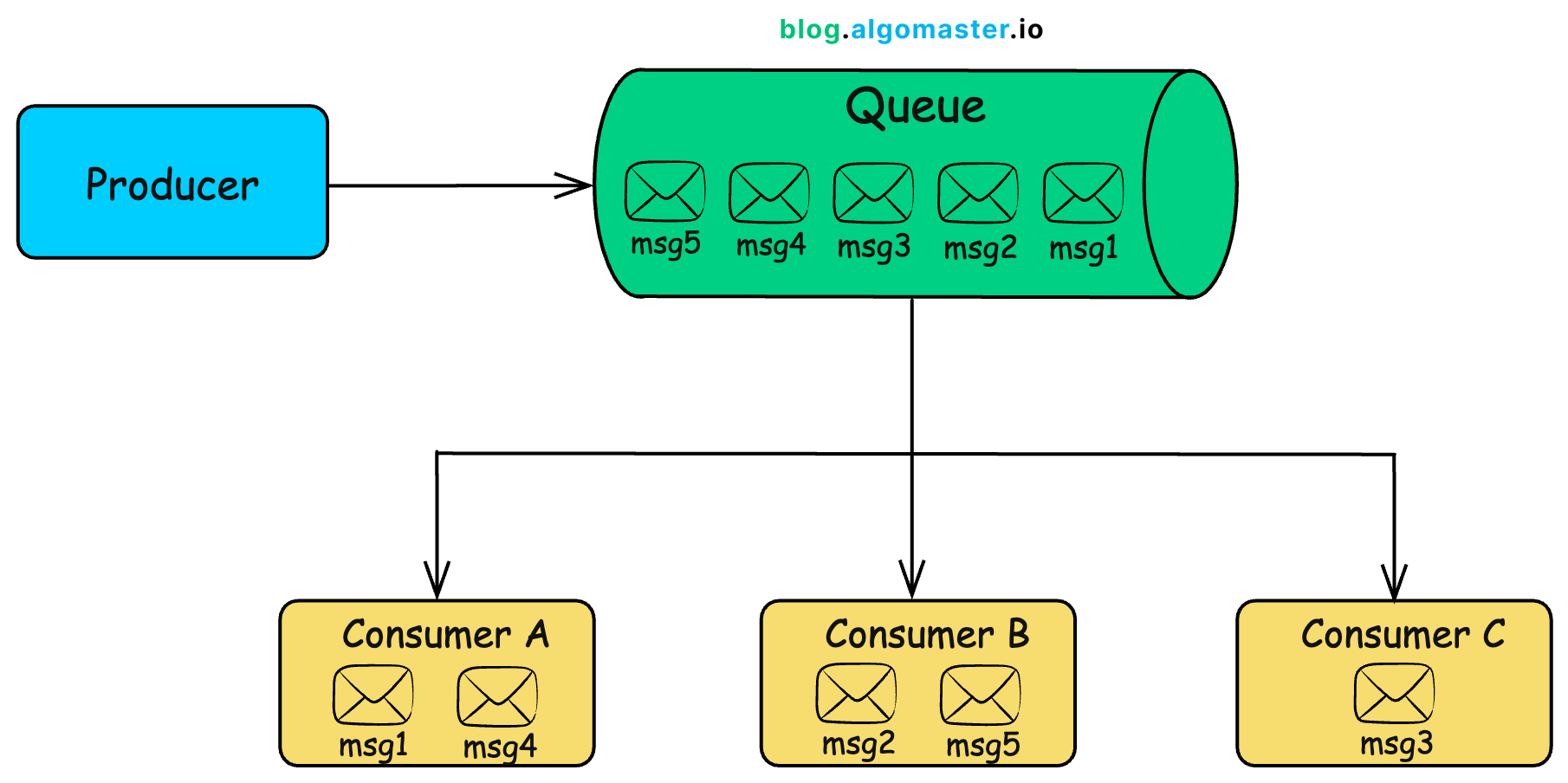
When multiple consumers connect to the same queue, they compete for messages. Each message goes to exactly one consumer.
Key Characteristics:
Delivery: Exactly one consumer receives each message
Ordering: First-In-First-Out (FIFO) ordering within a single queue
Persistence: Messages stored until consumed and acknowledged
Acknowledgment: Consumer must confirm successful processing
Retry: Failed messages can be retried or dead-lettered
1.3 Pub-Sub (Publish-Subscribe)
Pub-Sub is a messaging pattern where publishers send messages to topics, and all subscribers to that topic receive a copy of the message. Messages are broadcast, not consumed exclusively.
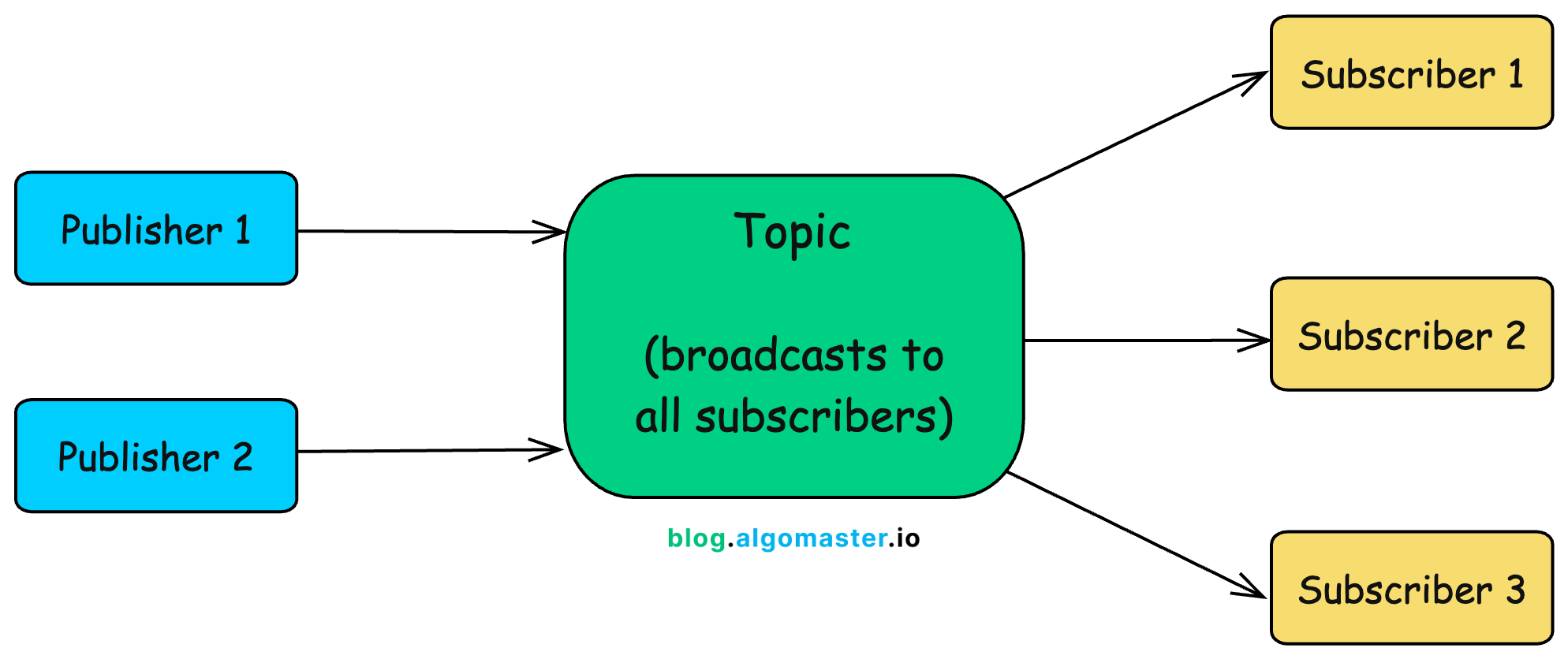
Think of it like a radio broadcast. The station (publisher) broadcasts a signal (message), and everyone tuned to that frequency (subscribers) receives it simultaneously.
It’s an asynchronous communication model that decouples services, making it easier to build scalable, event-driven systems. Pub/Sub is widely used in modern cloud architectures to deliver instant event notifications and enable reliable communication between independent components.
Examples: Redis Pub/Sub, SNS
Pub-sub naturally implements fan-out in event-drive architectures, where one event triggers multiple actions:
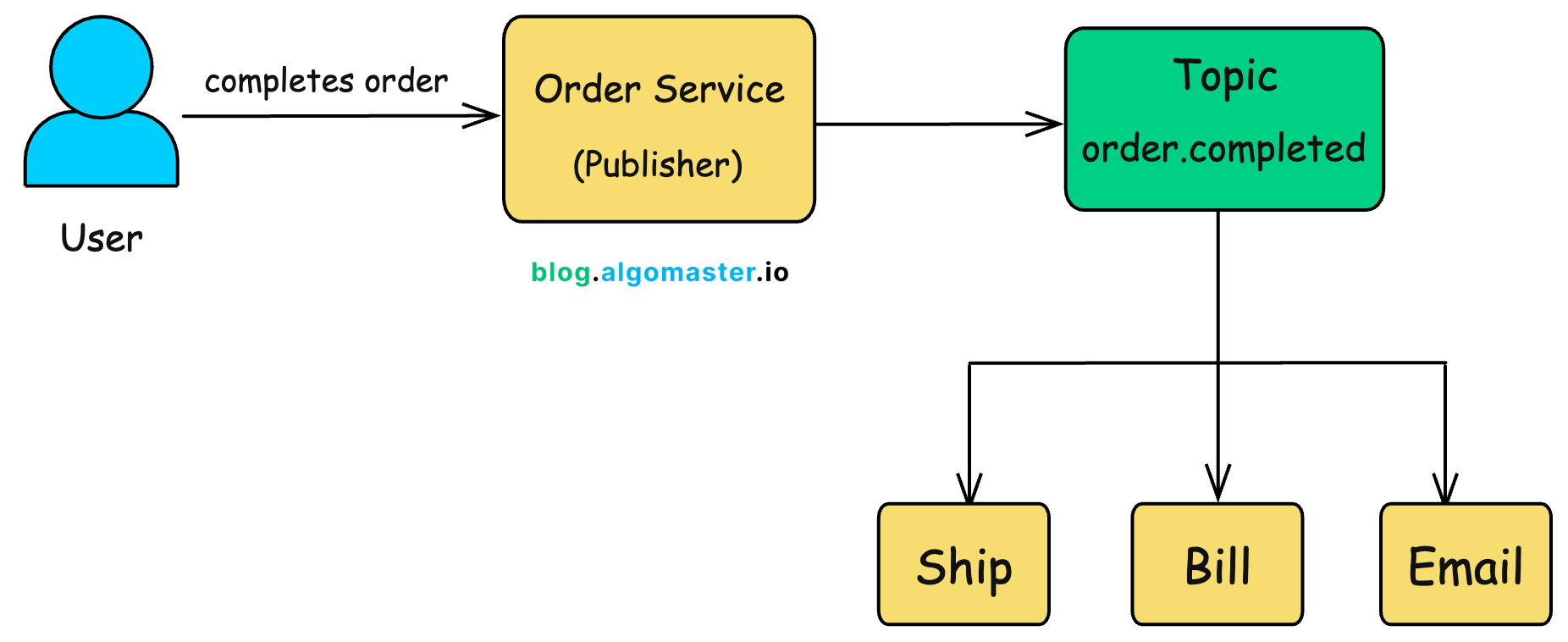
Key Characteristics:
Delivery: One-to-many. Each message delivered to all subscribers.
Decoupling: Publishers and subscribers are decoupled
Scalability: Easy to add new subscribers
Persistence: Messages may or may not be removed after delivery (depends on implementation)